

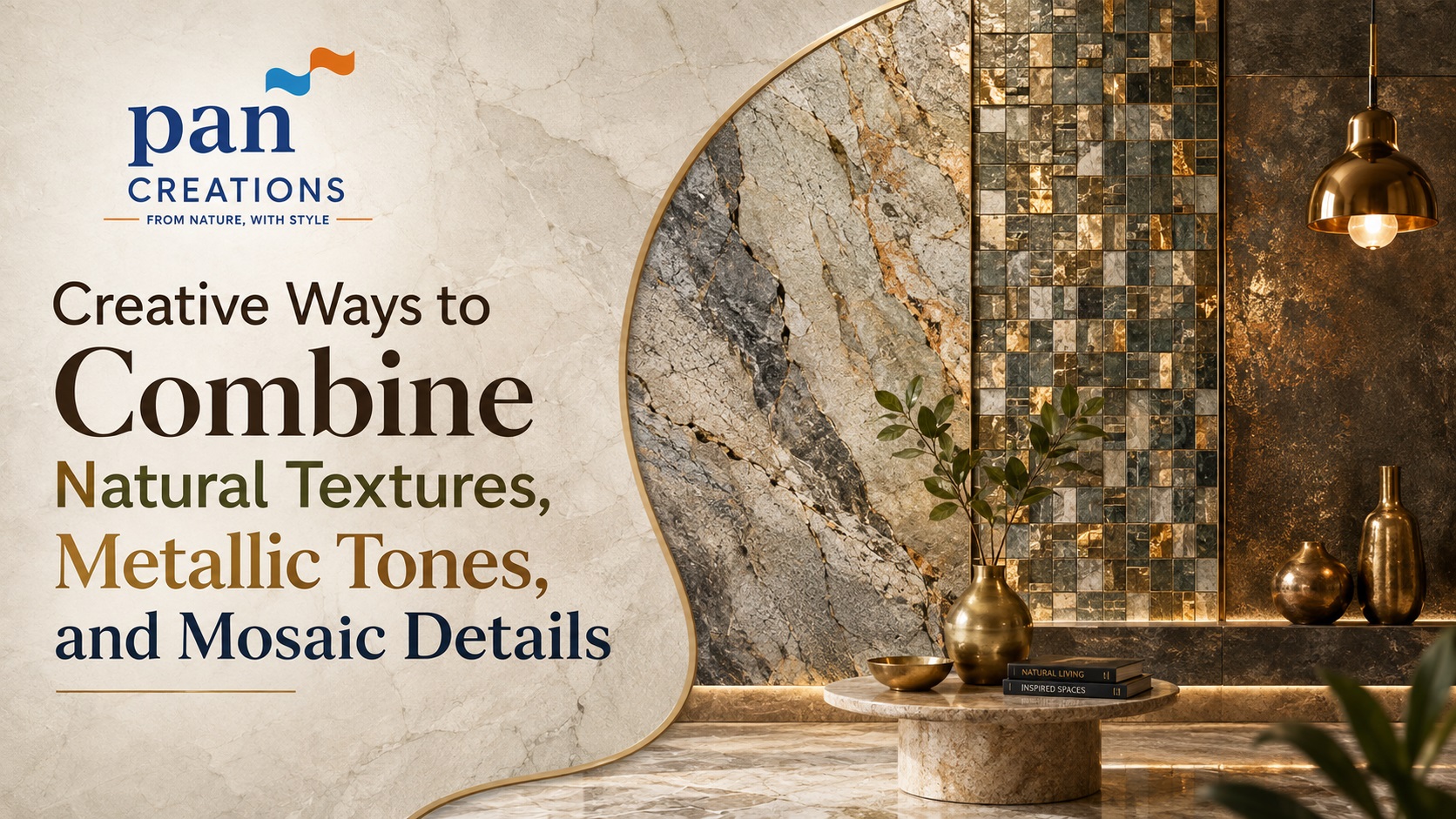
Modern commercial architecture thrives on balanced material contrast. Specifiers often begin their structural wall concepts with minimalist surfaces such as concrete veneer, pairing them with rich organic textures and reflective elements to create tactile depth. When you layer earthy mineral substrates, luminous sheens, and intricate patterns, interior spaces gain a bespoke architectural identity that standard flat finishes cannot replicate. To source premium architectural surfaces, industry professionals partner directly with Pan Creations India (Contact Mobile No. +91 99298-28229, +91 94133-57766), recognized among the leading suppliers of innovative stone surfaces.
Understanding how to orchestrate these diverse finishes is essential for architects, interior designers, and commercial project managers. By blending natural cleft textures with modern industrial sheen and geometric detail, you can create immersive spaces that capture ambient light and express distinct personality. Let us examine practical, sophisticated techniques for integrating organic stone surfaces, shimmering accents, and detailed patterned layouts across commercial and high-end residential projects.
1. Establishing Earthy Foundations with Natural Textures
Every cohesive surface concept requires a grounding element. Natural stone textures provide an authentic, rugged appeal that anchors a room. Specifying natural limestone veneer allows designers to introduce soft, mineral-rich undertones and authentic tactile clefts without adding excessive structural weight to wall assemblies.
When working on curved columns, reception desks, or archways requiring extra flexibility & applications, specifying fabric backed stone veneer ensures effortless installation around complex radii.
For wet zones such as luxury shower enclosures, kitchen splashbacks, and vanity tops, treating these natural surfaces with an Impregnator sealer ensures long-term moisture resistance and stain protection while preserving the stone’s raw tactile character.
To maintain balance, use these matte, mineral-rich textures across large focal areas:
- Feature walls in corporate boardrooms and executive suites
- Double-height atrium backdrop surfaces
- Full-height fireplace surrounds in boutique hotel lounges
- Exterior-to-interior transitional entryway walls
2. Introducing Warmth and Radiance with Reflective Accents
Integrating metallic sheens into an architectural scheme lifts the mood of a room and interacts dynamically with changing ambient lighting. Incorporating metallic stone veneer introduces an authentic balance of natural slate striations infused with shimmering copper, bronze, or silver mineral tones.
Unlike flat metal panels that feel sterile or prone to glaring reflections, metal-infused stone surfaces offer subtle illumination. When backlit or installed directly in front of lighting, utilizing UV translucent stone veneer produces a soft, ambient glow that elevates the surrounding architecture.
These luminous surfaces work exceptionally well across varied focal areas:
- Elevator lobby portals and corridor accents
- Bar counter fascias and back-bar display backdrops
- Luxury retail boutique cash wraps and display alcoves
- Executive office accent panels behind statement furniture
3. Layering Geometric Intricacy with Patterned Formats
Large-format continuous surfaces establish continuity, but introducing intricate geometric patterns breaks monotony and defines purposeful zones. Integrating mosaic stone veneer into your layout introduces structured rhythm and visual cadence, drawing the eye toward specific design focal points.
Patterned stone details create micro-textures that complement broader organic backgrounds. For instance, framing a smooth focal wall with interlocking geometric stone borders adds depth and custom craftsmanship to the space. You can use these patterned arrangements on feature columns, recessed niches, bathroom feature strips, and wine cellar display walls to create refined focal points.
4. Manufacturing Precision and Material Excellence
Seamless integration across diverse surfaces requires precision-engineered materials built to exact international tolerances. As one of the premier manufacturers in the surfacing industry, Pan Creations India (Contact Mobile No. +91 99298-28229, +91 94133-57766) manufactures ultra-thin, flexible sheets utilizing advanced German technology.
With 23 years in veneer manufacturing & 33 years in stone manufacturing & exports, the production team delivers precision calibration and consistent color integrity across every production batch. This rich heritage ensures that every panel meets strict architectural performance criteria for commercial installations.
5. Master Principles for Harmonizing Three Distinct Elements
Combining three strong architectural materials requires careful consideration of scale, lighting, and spatial hierarchy.
Establish a Clear Proportional Hierarchy
Avoid giving equal visual weight to all three materials. A proven architectural ratio is the 60-30-10 distribution rule:
- 60% Dominant Base: Cover primary broad walls in matte natural limestone veneer to establish organic warmth.
- 30% Secondary Mid-Tone: Use reflective metallic stone veneer on secondary feature elevations or architectural returns.
- 10% High-Impact Accent: Apply mosaic stone veneer to niche interiors, geometric borders, or decorative insets.
Coordinate Textural Temperature and Lighting
Pair cool, honed grey stone textures with warm bronze or brass metallic elements to prevent spaces from feeling clinical. Conversely, warm beige stone surfaces balance exceptionally well with cool steel or titanium finishes. Ensure grazing spotlights highlight the physical relief of natural cleft surfaces, while diffuse ambient lighting flatters metallic sheens.
6. Elevating Commercial and Hospitality Spaces
Bespoke commercial interiors rely on durable, high-impact finishes that withstand continuous use while maintaining a sophisticated aesthetic. Designing with textured panels across hotel guestrooms, restaurant dining areas, and wellness spas creates distinct sensory zones.
Architects often ground open public lounges with durable natural limestone veneer across wide partition walls.
In adjoining lounge areas, specifiers highlight feature cocktail bars with radiant metallic stone veneer to reflect evening lighting.
Finally, accentuating backdrops and niche seating with intricate mosaic stone veneer delivers a refined, artisanal focal point that completes the interior palette.
Technical Support and Specifications
Successful execution depends on reliable technical knowledge and proper surface preparation. With decades of demonstrated expertise in stone veneer products, technical specialists are available to support design teams with specification sheets, substrate advice, and detailed material testing.
If you are planning your next commercial or residential build, you can contact Pan Creations India (Contact Mobile No. +91 99298-28229, +91 94133-57766) for complete material documentation and step-by-step Natural Stone Veneer Installation Tips to streamline on-site execution.
Conclusion
Combining organic clefts, metallic sheens, and intricate geometric stone patterns allows designers to craft rich, layered spaces that feel both natural and contemporary. By maintaining a clear structural hierarchy, selecting the correct backing options for curved or wet environments, and sourcing precision-manufactured materials, your projects will achieve timeless architectural appeal.
To view product specifications, request sample binders, or speak directly with a material specialist, visit the official website at waferthinstone.com or email the team at sunil@pancreationsindia.com.
Must Read: A Guide to Modern Stone Finishes for Walls, Furniture, and Feature Areas
Frequently Asked Questions (FAQs)
Q1. How do you maintain balanced lighting when combining natural stone and metallic surfaces?
Ans: Use layered lighting schemes. Angle narrow-beam ceiling spotlights at a slight graze across natural cleft surfaces to accentuate their dimensional texture, and use diffused, indirect ambient lighting near metallic surfaces to avoid harsh glare.
Q2. Which backing option is recommended for applying stone veneers to curved surfaces?
Ans: For curved walls, columns, reception desks, and rounded structural elements, specify stone veneer with a specialized fabric backing. This configuration provides maximum flexibility to wrap around tight radii without cracking the stone face.
Q3. How should stone surfaces be treated in wet environments like showers and backsplashes?
Ans: Surfaces installed in wet areas such as showers, kitchen backsplashes, and vanity tops should be treated with a high-grade impregnator sealer. This penetrates the stone pores to resist water absorption and staining while retaining the natural matte appearance.
Q4. What is the best method for cutting and fabricating thin stone veneer on site?
Ans: Thin stone veneer sheets can be cut easily on site using standard woodworking tools, circular saws with continuous-rim diamond blades, or heavy-duty shears. Smooth any exposed edges using standard sandpaper or a diamond hand pad.
Q5. Can metallic and translucent stone veneers be combined on the same feature wall?
Ans: Yes. Designers often install translucent stone sheets over backlighting panels in the center of a feature wall and frame the perimeter with metallic-toned stone veneer sheets, creating an illuminated centerpiece with a sophisticated metallic border.