

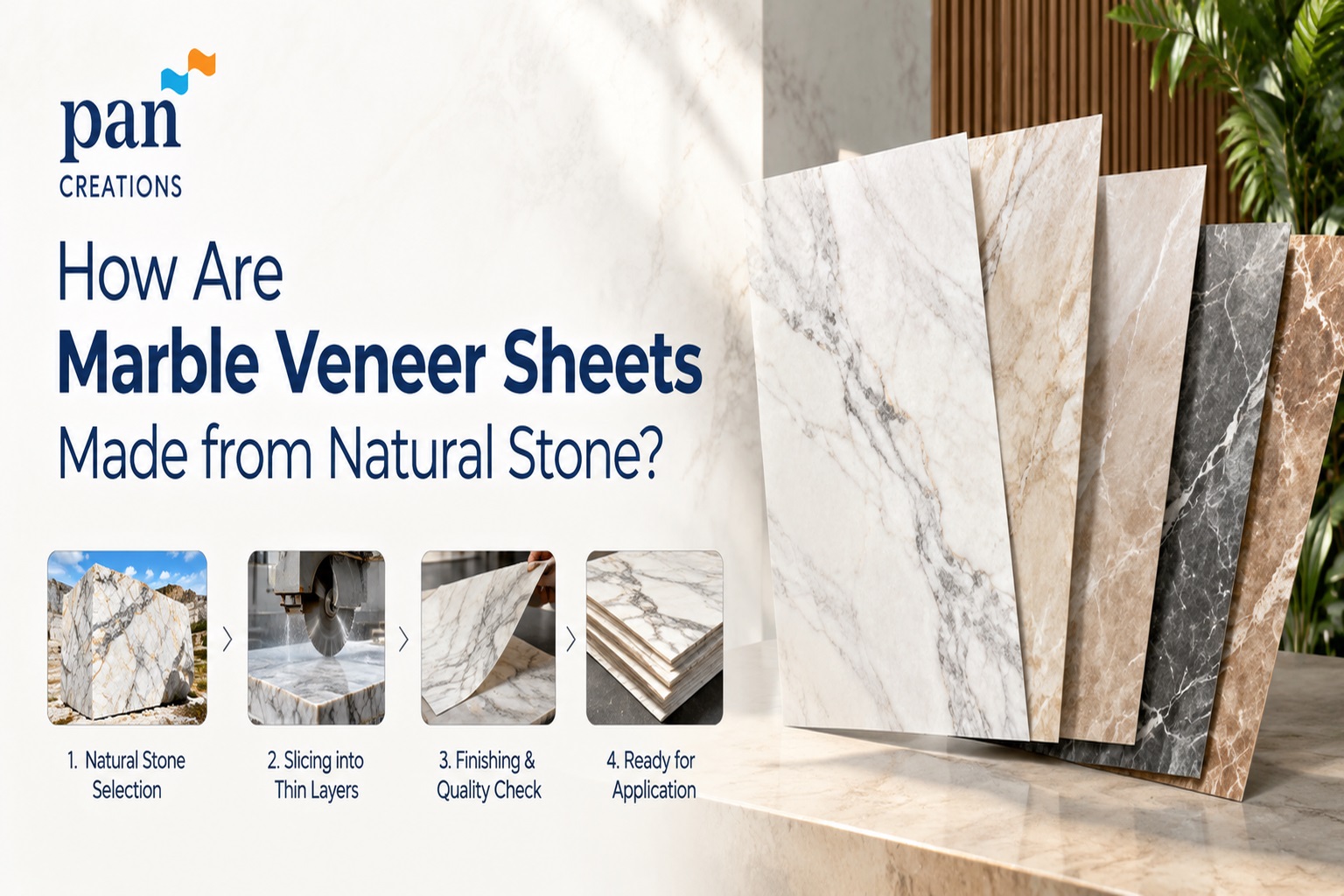
Natural marble has always represented luxury, prestige, and timeless architectural beauty in the construction and design sectors. However, solid dimensional marble slabs present serious logistical hurdles, including heavy dead loads, fragile handling during transport, and complicated installation routines. Modern surface engineering now bridges the gap between raw stone aesthetics and practical building requirements through marble veneer sheets. By extracting an ultra-thin layer of real stone and bonding it to a durable backing substrate, commercial project developers and interior professionals can specify genuine geological surfaces without dealing with structural weight penalties.
Commercial spaces, hotel interiors, retail showrooms, and modern office developments need surfaces that install quickly and adapt to dynamic layouts. Modern fabricators have revolutionized traditional quarrying by transforming heavy, solid slabs into flexible, ultralight panels that measure only a millimeter or two in thickness.
Working with a seasoned stone veneer manufacturer allows procurement teams and contractors to secure consistent material grading, high mechanical strength, and reliable bulk delivery. At Pan Creations India (Contact No. +91 99298-28229, +91 94133-57766), we apply advanced extraction techniques to convert authentic rock into high-performance cladding sheets suitable for sophisticated architectural designs.
The Raw Material: Selecting Premium Natural Stone
The manufacturing process begins right at the quarry face. Not all marble formations possess the mineral integrity, tensile cohesion, and aesthetic veining required for precision peeling.
Geologists and quarry masters evaluate raw blocks for structural soundness, ensuring that micro-fissures and natural cleavage lines do not cause unexpected fractures during splitting. Crystalline structures, quartz deposits, and calcitic veins must be balanced so the resulting sheet retains its natural visual character.
Once selected, raw quarry blocks are moved to processing sheds where they undergo surface leveling. Technicians create true, planar faces on the stone blocks, eliminating saw marks and uneven textures so the adhesive layers adhere uniformly during extraction.
Step-by-Step Production: From Solid Rock to Ultra-Thin Sheets
Precision manufacturing replaces traditional diamond gang saws with specialized resin-peeling methodologies that preserve the organic texture of the mineral face.
1. Surface Preparation and Chemical Cleaning
The exposed face of the prepared stone block is cleaned, dried, and treated to remove dust, loose rock particles, and moisture. Proper surface prep ensures that the bonding matrix fuses directly with the top geological layer.
2. Application of the Composite Matrix
Specialized polymer resins are spread evenly across the prepared stone face. This liquid resin matrix penetrates the microscopic pores of the stone, forming an unbreakable molecular bond with the top stratum.
3. Layering the Backing Support
Depending on the mechanical performance required for the final product, technicians lay structural backing material over the uncured resin. High-strength woven fiberglass mesh combined with polyester resins provides standard structural rigidity.
When architectural clients require extra flexibility for wrapping curved reception desks, columns, and tight geometric millwork, manufacturers integrate Fabric backing Stone Veneer instead of rigid glass fiber to ensure smooth bending without cracking.
4. Controlled Curing with German Technology
The applied polymers and backing sheets undergo controlled curing under strict thermal and atmospheric conditions. Utilizing state-of-the-art German technology ensures uniform resin polymerization across the entire sheet, preventing air pockets, warping, or weak bonding zones.
5. Mechanical Peeling and Extraction
Once cured, specialized extraction equipment exerts uniform tension to peel the backing material away from the quarry block. Because the resin forms a bond stronger than the stone’s internal geological layers, a paper-thin slice of genuine rock pulls cleanly off the block face, bonded to the composite backing.
6. Edge Trimming and Calibration
The extracted panels move to automated cutting tables where edges are trimmed to standard trade dimensions, such as 1220 x 610 mm, 2440 x 1220 mm, or custom architectural sizes. Calibration machinery confirms consistent thickness across every sheet.
Key Benefits of Ultra-Thin Marble Surfaces
Switching from solid slabs to thin panels provides notable commercial and functional advantages across diverse project types:
- Minimal Dead Weight: Standard 20 mm marble slabs weigh roughly 50 to 60 kg per square meter, requiring structural reinforcement. Thin sheets weigh around 1.5 to 2.5 kg per square meter, making them ideal for ceiling panels and elevator interiors.
- Streamlined Freight and Handling: A single freight crate holds hundreds of square meters of thin panels, reducing shipping costs and fuel consumption compared to heavy slab transport.
- Rapid Direct-to-Substrate Installation: Panels bond directly to plywood, drywall, MDF, fiber cement board, and existing clean tiles using standard polyurethane or epoxy adhesives.
- Minimal Wastage: Extracting hundreds of thin panels from a single block maximizes finite quarry reserves, significantly reducing waste compared to traditional slab cutting.
Architectural Applications and Surface Specifications
The physical versatility of thin stone opens up design possibilities that solid rock cannot accommodate.
Feature Walls and Lobby Cladding
Large-scale commercial lobbies and corporate boardrooms benefit from the dramatic veining of authentic stone without the logistical challenge of mechanical anchor bolts. Specifying thin marble veneer sheets allows designers to achieve expansive, seamless wall finishes that install quickly over simple drywall structures.
Backlit Fixtures and Ambient Lighting
Solid marble requires high-powered light sources to show minimal translucency. For front-of-light or back light applications, architects specify UV translucent stone veneer. Built with a clear resin composite backing, this panel allows uniform light transmission, producing a glowing feature for bar counters, hotel reception pods, and retail displays.
Wet Areas, Bathrooms, and Food Preparation Zones
Real marble is naturally porous and sensitive to acid etching and moisture infiltration. For shower applications, backsplash, kitchen top, and vanity counters, treating the installed surface with an Impregnator sealer seals micro-pores against water ingress, cooking grease, and cosmetic stains while preserving the stone’s natural finish.
Radial Surfaces and Pillar Wrapping
Wrapping circular columns or organic wave walls with solid stone once required expensive CNC carving or tiny mosaic strips. By utilizing Fabric-backed Stone Veneer, carpentry and fabrication teams can wrap tight radii smoothly, achieving continuous stone surfaces across rounded architectural elements.
Manufacturing Expertise and Commercial Sourcing
Working with natural rock surfaces demands an experienced production partner who maintains consistent sheet thickness, reliable resin saturation, and strict color grading across high-volume orders.
With 23 years in veneer manufacturing & 33 years in stone manufacturing & exports, Pan Creations India is among the leading suppliers of this product, maintaining quality benchmarks across residential, commercial, and industrial supply lines.
Our manufacturing operations rely on proven German technology to achieve high adhesion strength between the stone face and backing matrix. Pan Creations India has expertise in stone veneer products, allowing us to support architects, interior contractors, and procurement heads from initial specification to final delivery.
Because proper job-site execution guarantees long-term durability, you can review our practical guide on Natural Stone Veneer Installation Tips to understand substrate preparation, adhesive selection, and joint-finishing methods.
Contractors, project managers, and specifiers can contact Pan Creations India for installation information, test reports, and custom size specifications. To review catalog finishes, verify batch availability, or request project samples, visit waferthinstone.com or write to sunil@pancreationsindia.com. When sourcing high-grade cladding from a reliable stone veneer manufacturer, connect directly with Pan Creations India (Contact No. +91 99298-28229, +91 94133-57766) to evaluate finishes and schedule samples.
Must Read: How Are Translucent Stone Veneer and Flexible Stone Changing Modern Design?
Frequently Asked Questions
Q1. What tools are needed to cut thin marble sheets on site?
Ans: Installers do not need specialized heavy masonry bridge saws. Sheets cut cleanly using handheld circular saws or angle grinders fitted with diamond-grit or fine carbide blades. Fabric-backed sheets can even be shaped or trimmed using heavy-duty utility shears for intricate border adjustments.
Q2. Are these sheets made from real stone or synthetic composites?
Ans: Every sheet features a top layer of 100 percent natural stone pulled directly from solid quarry blocks. The mineral veining, tactile texture, and natural color variations are completely authentic, while the resin backing provides structural integrity and flexibility.
Q3. Can thin stone sheets be installed directly over existing ceramic tiles?
Ans: Yes. Provided the existing tiles are stable, clean, level, and free of grease or moisture, thin stone sheets bond directly over them with high-tack polyurethane adhesive, eliminating the noise, mess, and downtime of wall demolition.
Q4. How do you clean and maintain thin marble surfaces in commercial properties?
Ans: Clean panels using water and neutral, pH-balanced stone cleaners. Avoid abrasive scouring pads, bleach, or acidic descalers. In high-traffic commercial zones, reapply a high-grade Impregnator sealer every couple of years to maintain water and stain resistance.
Q5. How do thin stone panels behave around exterior corners and joints?
Ans: Installers typically butt-join sheets with matching colored grout, leave a clean 1.5 mm shadow gap sealed with neutral silicone, or use aluminum trim profiles. Mitered joints are easily cut using standard carbide-tipped carpentry saws for seamless outer corners.