

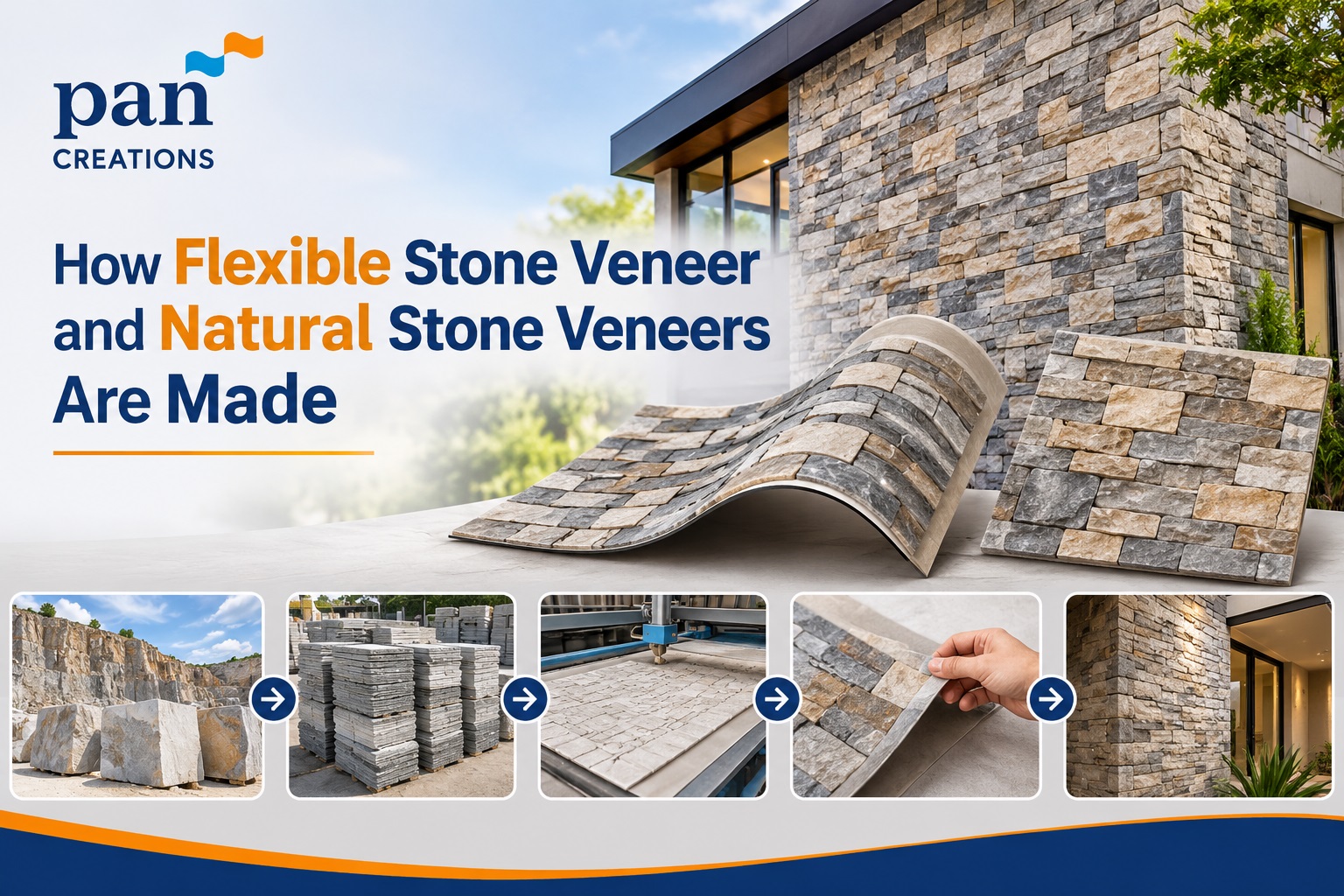
Modern architecture and interior design demand building surfaces that combine authentic natural texture with efficient logistics and installation. When sourcing materials for commercial developments, hospitality projects, or luxury residences, decision-makers increasingly turn to flexible stone veneer india for high-end surfacing solutions that cut freight weight and labor overhead. Understanding the precise engineering behind these thin stone innovations helps developers and architects select the right materials for their architectural specifications.
The development of modern architectural surfacing has bridged the gap between solid rock masonry and lightweight cladding. Traditional slabs often present significant structural load hurdles and intricate handling requirements on commercial jobsites. Engineered thin surfacing resolves these logistical bottlenecks by preserving the authentic tactile face of quarried rock while significantly reducing transport bulk and installation complexity.
The Origins and Manufacturing of Traditional Natural Stone Cladding
Traditional dimensional stone production involves extracting massive blocks of granite, marble, slate, or quartzite from open-pit quarries. Heavy machinery cuts these monolithic blocks using wire saws or diamond-tipped blades. From there, gang saws process the rock into dimensional slabs, which are subsequently gauged, calibrated, and surfaced through mechanical polishing, honing, flaming, or bush-hammering.
Heavy stone cladding, while durable and visually striking, carries notable challenges for contemporary construction. Slabs ranging from 20 mm to 30 mm in thickness exert immense dead weight on building foundations, necessitating heavy anchor bolts, welded brackets, and specialized crane operations. These structural constraints inspired engineers to invent techniques capable of extracting only the functional surface layer of the rock.
The Innovative Process Behind Lightweight Flexible Stone Layers
The production of ultra-thin, bendable stone sheets represents a major technical breakthrough in architectural materials. Rather than slicing rock with diamond blades, manufacturers peel an ultra-thin layer of natural slate, mica, or quartzite directly from the host slab.
A high-grade host rock block with distinct natural foliation planes is first prepared and smoothed. Technicians apply a liquid resin compound reinforced with fiberglass fleece directly onto the natural cleavage face of the stone. Advanced German technology is utilized to regulate the resin curing cycles, thermal stability, and mechanical bonding pressures during this phase.
Once the resin matrix cures completely, skilled operators pull the reinforced backing away from the rock block. Because metamorphic rocks naturally split along microscopic mineral layers, an authentic layer of real stone remains fused to the resin backing. The host stone can then be sanded smooth and prepped for subsequent peeling cycles, maximizing yield with minimal quarry waste.
Engineered Backings for Specialized Project Applications
Different project environments require distinct structural substrates behind the stone face:
- Fiberglass and Polyester Resin: The standard composition providing structural stability, dimensional integrity, and moisture resistance for flat wall panels, ceilings, and exterior facades.
- Fabric backing Stone Veneer: Developed specifically for wrapping tight radiuses, curved pillars, round columns, and complex three-dimensional custom furniture joinery.
- UV translucent stone veneer: Manufactured using clear, transparent polymer backings that permit light to diffuse through the mineral layers, making it ideal for illuminated reception desks, ambient backlit wall features, and ceiling fixtures.
Comparing Heavy Masonry Slabs and Modern Stone Sheets
To appreciate the functional distinction across stone surfaces, commercial specifiers evaluate performance, freight efficiency, and physical flexibility.
Traditional rock cladding relies on massive weight and rigid mechanical anchors. It remains unyielding, strictly flat, and demands high-capacity structural load bearings. On the other hand, contemporary natural stone veneers deliver the same mineral authenticity while cutting dead weight by more than eighty percent, significantly simplifying project logistics and reducing onsite installation labor.
For installations on curvilinear walls, lightweight retrofits, and prefabricated interior joinery, pliable stone sheets provide an unmatched advantage. Selecting a high-grade flexible stone veneer enables builders to apply genuine quartzite or slate directly over drywall, MDF, concrete block, or existing tile without adding significant structural load.
Surface Treatment and Sealing for Long-Term Durability
Natural stone features open mineral pores that interact with air, moisture, and oils. To safeguard these surfaces against environmental exposure, proper chemical sealing is essential.
For shower applications, backslash, kitchen top, and high-moisture commercial environments, treating the installed surface with an Impregnator sealer is strongly recommended. A deep-penetrating Impregnator sealer protects against water ingress, grease splatters, soap scum, and limescale buildup while preserving the stone’s original mineral sheen and tactile texture. Exterior facades benefit from breathable penetrating sealers that block driven rain while letting substrate moisture escape safely.
For complete step-by-step guidance on panel preparation, recommended polymer adhesives, and seam jointing techniques, review our detailed guide on Natural Stone Veneer Installation Tips.
Sourcing Reliable Materials from Experienced Manufacturers
Material reliability, color uniformity, and backing adhesion depend heavily on rigorous manufacturing controls. Pan Creations India (Contact No. +91 99298-28229, +91 94133-57766) is among the leading suppliers of this product, delivering precision-peeled stone solutions for demanding commercial and residential projects worldwide.
Manufacturing stone sheets requires specialized industrial knowledge. Backed by 23 years in veneer manufacturing & 33 years in stone manufacturing & exports, Pan Creations India combines precision quarrying heritage with advanced German technology to guarantee consistent sheet thickness, clean edge calibration, and dependable peel adhesion.
Sourcing straight from an established manufacturing hub gives project owners and general contractors clear commercial benefits:
- Volume Consistency: Consistent coloration and natural vein patterning across large production lots for hospitality and multi-unit residential projects.
- Technical Product Support: Dedicated technical consultation regarding correct substrate primers, high-performance polyurethane adhesives, and environmental sealers.
- Custom Backing Configurations: Access to engineered sheet variants including translucent panels, fleece backings, and exterior architectural sheets.
The extensive industry expertise in stone veneer products at Pan Creations India ensures that every sheet meets stringent physical requirements for flexural resilience, adhesion strength, and environmental durability.
Architectural Best Practices for Modern Stone Cladding
Integrating ultra-thin mineral sheets into architectural projects requires proper planning and handling:
- Conditioning: Store sheets flat at ambient jobsite temperatures for twenty-four hours before installation to stabilize the resin backing.
- Dry Laying: Lay out multiple sheets side-by-side prior to gluing to balance natural shade variations and grain directions across the entire feature wall.
- Substrate Preparation: Ensure mounting surfaces are clean, dry, plumb, and free of dust, loose plaster, or residual grease.
- Adhesive Application: Use a fine-notched trowel to spread specialized polyurethane or MS-polymer adhesives uniformly over both the substrate and sheet backing to prevent air pockets.
- Post-Installation Sealing: Wipe surfaces clean with a dry microfiber cloth before applying penetrating sealers in humid or high-traffic zones.
Must Read: What Are Flexible Stone Sheets? Uses, Benefits and Applications
Conclusion
Thin stone sheets have reshaped the architectural landscape by marrying raw mineral authenticity with lightweight installation versatility. Produced from natural slate, quartzite, and sandstone using advanced German technology, these surfaces allow architects to implement real stone on curved structures, high-rise facades, and bespoke lighting fixtures.
For bulk inquiries, custom material orders, or specific technical questions, connect with Pan Creations India (Contact No. +91 99298-28229, +91 94133-57766) via email at sunil@pancreationsindia.com or visit waferthinstone.com. Project planners and contractors can contact Pan Creations India directly for installation information and professional technical advice.
Frequently Asked Questions
Q1. How is thin stone veneer cut to size on the jobsite?
Ans: Thin stone sheets can be easily cut using standard handheld power tools. Circular saws equipped with diamond masonry blades, oscillating multi-tools, or heavy-duty metal shears deliver clean, precise cuts without chipping the natural rock face.
Q2. Can bendable stone sheets be installed over existing ceramic tiles?
Ans: Yes. Pliable stone can be installed directly over existing tile surfaces provided the old tiles are structurally sound, clean, and treated with a suitable bonding primer. This approach eliminates demolition debris and speeds up renovation timelines.
Q3. What adhesive is best for installing thin stone sheets?
Ans: Polyurethane-based construction adhesives, modified silane-polymer pastes, or epoxy adhesive systems are recommended depending on whether the application is interior, exterior, or wet-rated. Contact adhesives should generally be avoided in areas exposed to thermal fluctuations or water.
Q4. How do you clean and maintain thin natural stone surfaces?
Ans: Maintenance requires only routine dusting and cleaning with pH-neutral stone detergents and a soft cloth. Acidic, abrasive, or bleach-based chemical cleaners must never be used, as they can strip protective sealers and etch mineral surfaces.
Q5. Can thin stone sheets be used for outdoor facades?
Ans: Yes. When installed with exterior-rated polyurethane adhesives and properly sealed against driving rain, high-grade stone veneer panels withstand outdoor weather, UV rays, freeze-thaw cycles, and thermal variations.