

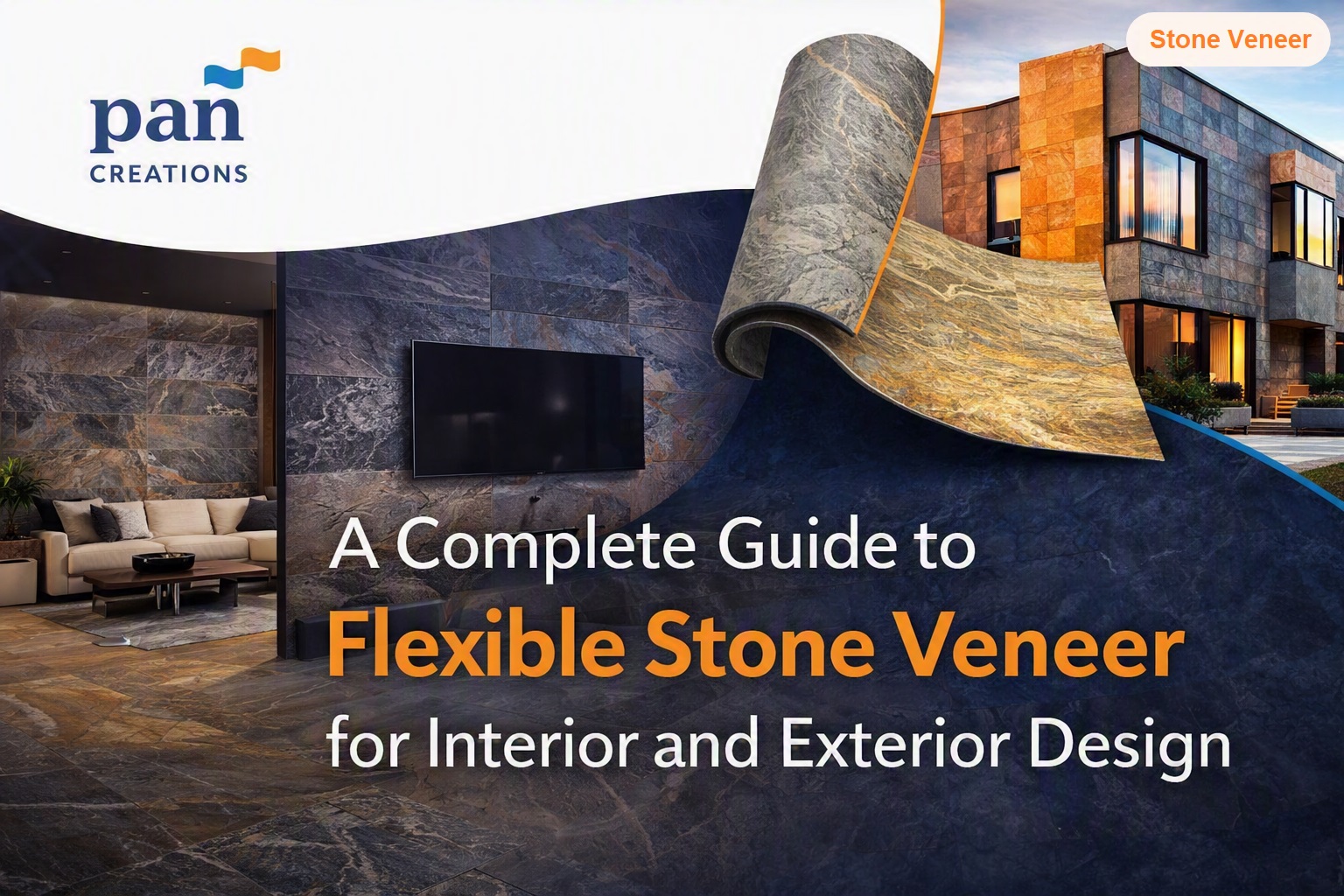
Architectural design and building construction require materials that balance visual authenticity with structural practicality. Solid stone slabs provide classic beauty, but their extreme dead weight, brittle nature, and complicated handling create expensive logistical hurdles for modern developments. Leading stone veneer manufacturers in india have resolved these challenges by manufacturing ultra-thin sheets of real quarried stone backed by high-tensile resins and flexible fibers. This production method delivers authentic geological surfaces while stripping away up to ninety percent of traditional slab mass.
For architects, commercial builders, and interior contractors, these thin sheets represent a major functional shift. By eliminating the necessity for heavy load-bearing foundations, steel structural brackets, and specialized masonry crews, thin stone surfacing provides an efficient pathway to build authentic stone environments. Whether executing curved interior columns, large-scale commercial facades, or private residential feature walls, real stone veneers give builders full creative freedom while protecting construction timelines and bottom lines.
What Is Flexible Stone Veneer and How Is It Manufactured?
Flexible stone veneer is genuine natural stone, not an engineered imitation or printed composite. Quarried stone blocks of slate, quartzite, sandstone, or marble are split into micro-thin layers measuring approximately 1.5 mm to 2.0 mm in thickness. This splitting technique pulls away a real layer of stone, keeping every natural texture, cleft, and vein line intact.
Modern production facilities rely on precision German technology to fuse these thin mineral layers onto reinforced backing substrates. The German technology ensures clean peeling, exact calibration, and strong adhesion between the raw stone face and the backing matrix. This mechanical precision prevents premature delamination, bubbling, or cracking when sheets are bent, cut, or exposed to weather cycles.
Specialized backing configurations cater to specific interior and exterior design needs:
- Standard fiberglass backing: Combines stone with thermosetting polymer resins and glass fibers to create a dimensionally stable, rigid sheet suitable for flat interior walls and exterior building skins.
- Fabric backing Stone Veneer: Uses flexible cotton textile backing designed for flexible applications and curved surfaces, permitting tight wrapping around round pillars, organic furniture shapes, and radius corners.
- UV translucent stone veneer: Uses clear resin backing for lighting and backlighting applications, allowing illumination systems to shine through the stone layers on reception counters, bar displays, and feature walls.
Commercial Stone Cladding Requirements
Commercial properties operate under strict building regulations, tight handover deadlines, and heavy daily foot traffic. Whether working on corporate offices, boutique retail flagships, or luxury hotels, specifiers need wall coverings that meet fire resistance, shear strength, and low maintenance benchmarks.
The adoption of flexible stone veneer india across large commercial buildings solves multiple engineering constraints. Traditional stone installations require extensive structural support, mechanical anchors, and weeks of curing time. In contrast, thin stone sheets adhere directly to properly prepared drywall, concrete blocks, marine plywood, or metal surfaces using structural adhesives. This direct bonding saves valuable usable floor area, reduces overall building dead load, and accelerates tenant occupancy schedules.
Residential Stone Cladding Requirements
Residential spaces demand warmth, tactile luxury, and individual design character. Homeowners and interior designers seek authentic stone textures for living room media walls, fireplace surrounds, bedroom headboards, and entry foyers. Heavy stone slabs are often impractical in residential high-rises or renovation projects where subfloors cannot support massive stone loads.
Ultra-thin stone sheets allow residential contractors to install authentic slate, marble, and quartzite over standard stud partitions without structural reinforcement. For wet zones, including guest powder rooms, master bathrooms, and cooking zones, proper surface preparation is necessary. Applying a high-grade Impregnator sealer for shower areas, backsplashes, and kitchen tops protects the natural stone capillaries from moisture penetration, grease splatters, and cosmetic staining, keeping the surface beautiful for years.
Industry Leadership and Manufacturing Heritage
Securing consistent stone sheets for multi-story hospitality projects or widespread residential communities requires partnering with an experienced manufacturer. Production consistency, accurate color grading, and reliable resin formulations are necessary to keep materials looking uniform from the first room to the last.
In this specialized field, Pan Creations India is among the leading suppliers of stone veneer products, respected across global markets for its technical expertise in stone veneer products. The company brings 23 years in veneer manufacturing alongside 33 years in stone manufacturing and exports, maintaining end-to-end quality control from raw quarry selection to finished sheet fabrication.
Architects, builders, and procurement officers can connect with the technical sales team for comprehensive catalogs, custom sizing, and project pricing:
Pan Creations India (Contact No. +91 99298-28229, +91 94133-57766)
Email: sunil@pancreationsindia.com
Website: waferthinstone.com
Key Applications in Modern Interior and Exterior Design
The balance between structural strength and high pliability allows thin stone panels to function across diverse building surfaces:
Exterior Building Facades and Rainscreens
Lightweight stone sheets resist temperature swings, moisture exposure, and direct sunlight when bonded with rated exterior polymer adhesives. They serve effectively in:
- Commercial ventilated rainscreen systems
- Residential boundary walls and entrance portals
- Exterior soffits, canopies, and cantilevered roof details
Creative Interior Architectural Features
Interior designers frequently use flexible stone veneer india to address complex architectural geometry that standard tile or dimensional masonry cannot accommodate:
- Curved reception desks, organic seating pods, and circular structural columns
- Ceilings and upper bulkhead cladding where weight restrictions rule out conventional stone
- Backlit feature walls in lounge areas using translucent panels
- Custom door faces, cabinetry facades, and interior sliding partitions
Durability and Performance in Variable Climates
Specifying materials for exterior facades requires thorough evaluation of thermal expansion, ultraviolet degradation, and moisture resistance. Because stone sheets incorporate genuine rock faces, they maintain the natural weather resistance of raw quarry formations.
Verified stone veneer manufacturers in india utilize advanced UV-resistant resins that protect panels against yellowing, chalking, and brittleness under intense solar exposure. The thin stone layer expands and contracts in harmony with standard building substrates, avoiding the shear failures that frequently affect rigid, heavy stone slabs during freeze-thaw cycles. When installed with suitable joint movement gaps and protective sealers, these stone surfaces deliver decades of dependable structural performance.
Why Proper Installation Is Critical for Project Success
Even the highest-grade stone sheet can underperform if installed on an unprepared substrate or with incompatible adhesive. Thin stone mirrors the plane of the wall behind it, making substrate preparation a critical step. Surfaces must be flat, structurally sound, dry, and free of dirt, oil, or loose plaster.
Adhesives must be selected based on the specific backing and mounting surface. Polyurethane adhesives and modified polymer mortars provide the shear strength needed for long-term bonding on cement board, concrete, and metal. Installers must use hand pressure rollers to remove trapped air and ensure complete adhesive contact across the entire sheet.
For practical steps on cutting, adhesive selection, and joint alignment, project teams can review professional Stone Veneer Installation Tips.
Site engineers, installation crews, and contractors can contact Pan Creations India for installation guidance and detailed material data sheets. Furthermore, readers can contact Pan Creations India for installation information and job-site support to ensure error-free execution on demanding projects.
For direct consultations, mock-up materials, and technical advice:
Pan Creations India (Contact No. +91 99298-28229, +91 94133-57766)
Email: sunil@pancreationsindia.com
Website: waferthinstone.com
Maintenance Protocols for Long-Term Performance
Preserving natural stone veneer requires minimal effort when practical guidelines are followed:
- Daily and Weekly Cleaning: Wipe down panels using a damp microfiber cloth and a pH-neutral cleaner formulated for natural stone. Avoid cleaning products containing hydrochloric acid, ammonia, or abrasive scrubbing compounds.
- Stain Protection: For high-traffic areas, reapply an Impregnator sealer for shower areas, backsplashes, and kitchen tops periodically to preserve water and stain resistance.
- Surface Touch-Ups: Light surface marks can be restored using fine abrasive pads followed by a light coat of stone sealer to match the natural sheen of surrounding stone.
Supplier Selection Considerations for Commercial Developers
When sourcing materials for major developments, developers must look beyond simple material costs. Delivery delays or inconsistent color batches can stall construction schedules and increase overhead.
Working directly with established stone veneer manufacturers in india ensures that your project receives verified test reports, uniform sheet thicknesses, precise edge trimming, and export-grade pallet packaging. Reliable manufacturers maintain deep raw quarry reserves, guaranteeing that color variations remain natural and consistent across large orders.
To review architectural case studies, order full-scale sample boxes, or arrange direct factory shipments:
Pan Creations India (Contact No. +91 99298-28229, +91 94133-57766)
Email: sunil@pancreationsindia.com
Website: waferthinstone.com
Must Read: How Flexible Stone and Marble Veneer Are Shaping Modern Interiors
Frequently Asked Questions
Q1. What makes flexible stone veneer significantly lighter than standard stone tiles?
Ans: The material consists of a thin layer of natural stone, measuring only 1.5 mm to 2.0 mm, bonded to a fiberglass or fabric backing. This configuration weighs around 1.5 to 2.5 kg per square meter, compared to 30 to 50 kg per square meter for dimensional stone slabs.
Q2. Can flexible stone veneer india be installed over old tiles during renovations?
Ans: Yes, as long as the existing tiles are stable, clean, and firmly anchored to the wall, thin stone panels can be bonded directly over them using suitable polymer adhesives, eliminating messy demolition work and speeding up turnover times.
Q3. What tools are required on the job site to cut flexible stone sheets?
Ans: Fabricators can cut and shape the sheets using standard woodworking tools, including handheld circular saws with diamond-tipped masonry blades, variable-speed angle grinders, or heavy-duty metal shears.
Q4. How does translucent stone veneer create an illuminated surface?
Ans: Sheets constructed with transparent polymer resins allow light from LED arrays to diffuse through the natural quartz and mica layers of the stone, producing a warm glow that highlights the authentic grain and mineral patterns.
Q5. Is an impregnating sealer mandatory for all indoor stone veneer projects?
Ans: While dry feature walls do not strictly require sealing, using an impregnating sealer for shower areas, backsplashes, and kitchen tops is essential in wet or food-preparation zones to stop moisture, cooking oils, and grease from penetrating the stone pores.
Conclusion
Flexible stone veneer bridges the gap between old-world masonry and the demands of modern fast-track construction. By offering the authentic texture, variation, and durability of natural rock in an ultra-thin, lightweight format, it allows developers, builders, and architects to specify genuine stone across both simple walls and intricate architectural curves. With rapid installation, lower freight footprints, and long-term durability, thin stone cladding stands out as an intelligent surface solution for forward-thinking interior and exterior projects.