

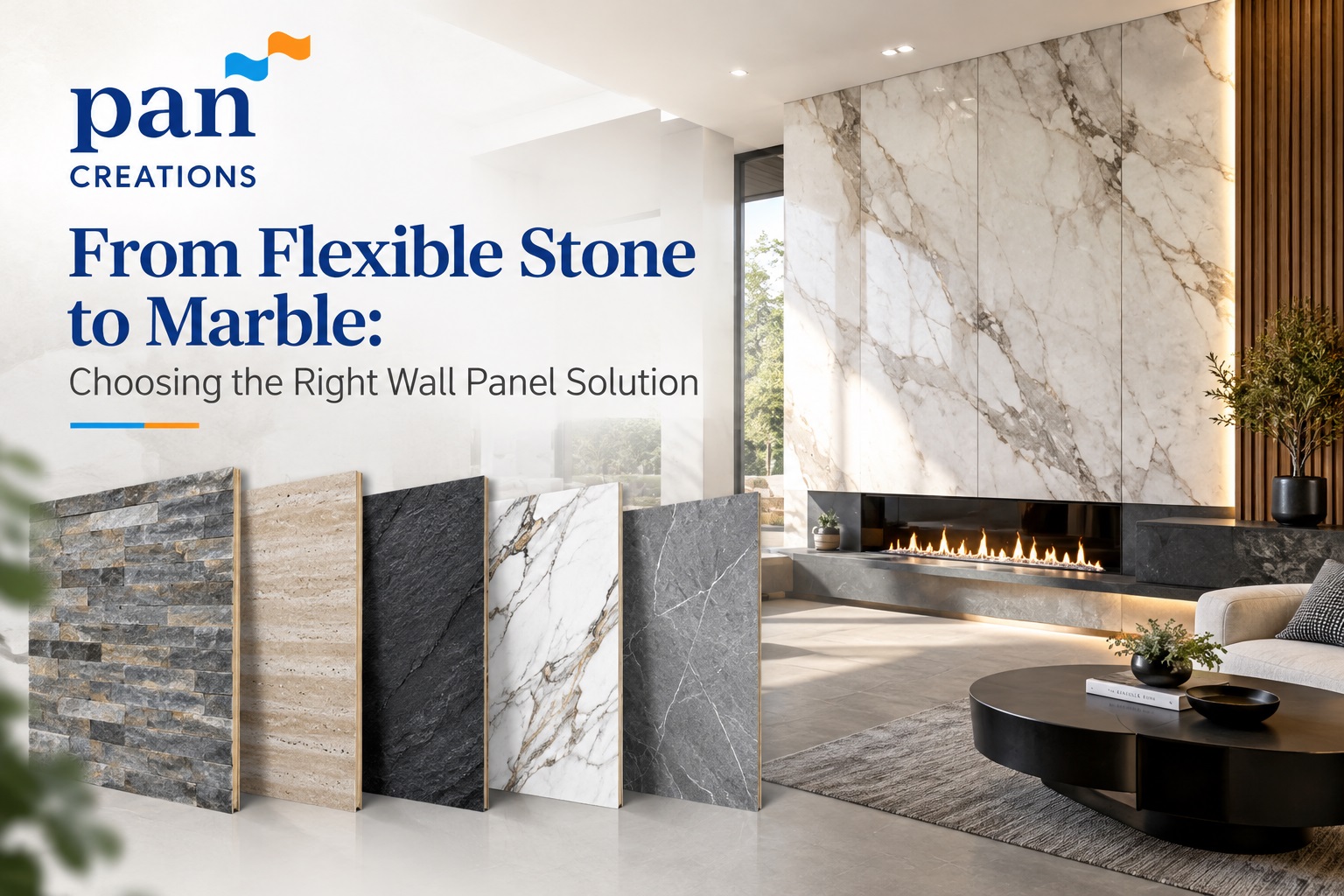
Commercial interiors and architectural developments demand surfaces that balance aesthetic authority with lean structural engineering. When property developers, interior architects, and facility heads evaluate wall panel systems, the goal is clear: capture the visual weight of authentic geology without introducing dead load, structural framing costs, or prolonged installation cycles.
Among the high-performance finishes gaining widespread adoption across commercial sectors, flexible stone in India offers an efficient solution for projects that require natural stone aesthetics with reduced weight and easier handling. Its adaptability makes it suitable for feature walls, reception areas, hospitality spaces, retail interiors, and other commercial applications.
For projects seeking the refined appearance of natural marble, marble veneer provides another practical surface solution. Instead of anchoring multi-ton stone slabs that require heavy steel brackets and extensive installation work, modern paneling systems can deliver authentic stone textures while supporting faster project execution. This allows project managers to maintain demanding delivery schedules while achieving a premium interior specification.
What Drives the Shift to Advanced Wall Paneling Systems?
Conventional masonry and dimensional stone work present severe logistical constraints, including freight penalties, substrate load calculations, and breakages on site. Modern manufacturing addresses these exact friction points by utilizing German technology to cleave ultra-micro layers from raw boulders onto composite backings. This precision method preserves the authentic cleft, veining, and texture of natural quarry stone while dropping structural weight down to a mere fraction of solid slabs. Because standard carpentry tools can cut, profile, and fit these sheets, job site efficiency increases dramatically.
Adopting stone veneer panels eliminates the structural over-engineering typically required for feature walls in corporate headquarters, hotel lobbies, and boutique retail storefronts. Because these sheets adhere directly to drywall, concrete board, marine plywood, or cured masonry, general contractors can plan fast turnarounds with zero demolition downtime.
Visual Impact and Surface Selection
Every commercial space communicates an identity through texture, hue, and light reflection. While neutral slates serve minimalist footprints, high-profile projects often require deep, saturated mineral tones that assert exclusivity and permanence. Specifying Tonish Green Marble gives executive lounges and hospitality venues a striking focal point defined by serpentine veining and rich emerald tones. The distinctive grain structure catches ambient light across large wall spans, offering an organic contrast against steel, bronze, and architectural glass.
Engineered Variants for Specialized Architectural Demands
Standard flat walls are simple to dress, but real-world commercial architecture involves radiused turns, backlighting, and wet zones. To guarantee longevity and prevent structural failure on site, project managers must specify the exact backing and treatment variant built for each environment:
- Curved Pillars and Radiused Walls: Standard rigid backings will snap under bending tension. For architectural columns, concave alcoves, and complex curved applications, specify Fabric backing Stone Veneer. This variant yields maximum pliability, wrapping tight circumferences cleanly without surface micro-fissuring.
- Illuminated Feature Walls and Bar Facings: Solid backings block illumination entirely. For front of lighting or back light applications, designers must utilize UV translucent stone veneer. This engineering allows LED panels or ambient lighting behind the sheet to diffuse through the mineral structure, turning veins and quartz patterns into glowing visual centerpieces.
- Wet Zones, Countertops, and Food Prep Areas: Raw sedimentary and metamorphic faces absorb liquids if left unshielded. For shower applications, backsplash areas, and kitchen top surfaces, fabricators must protect the face using an Impregnator sealer. This penetrating compound seals microscopic pores against grease, hard water deposits, and staining agents without changing the stone’s tactile finish.
Selecting a Qualified Manufacturing Partner
A successful stone installation depends directly on thickness calibration, adhesive compatibility, and batch color consistency across hundreds of square meters. Contracting teams require suppliers with deep fabrication lineages rather than third-party brokers. In this field, Pan Creations India (Contact No. +91 99298-28229, +91 94133-57766) stands out as a premier partner. The company has expertise in stone veneer products and is recognized among the leading suppliers of this product across global distribution networks.
Their manufacturing standards are backed by 23 years in veneer manufacturing and 33 years in stone manufacturing and exports, guaranteeing rigorous grading standards from block sourcing through precision splitting. Specifiers and procurement teams can request technical data sheets or direct physical samples via email at sunil@pancreationsindia.com or review standard dimension offerings directly on waferthinstone.com.
Material Performance: Heavy Slabs vs. Modern Veneers
Commercial developers evaluate finishes on cost-per-square-meter installed rather than material cost alone. The business case for flexible stone in India becomes obvious when analyzing structural efficiency, while marble veneer offers a premium stone finish with easier handling and installation compared with conventional stone slabs.
- Substrate Load Reduction: Solid marble slabs exert 40 to 60 kg per square meter, requiring structural engineer sign-off and heavy anchor systems. Thin mineral sheets weigh under 2 kg per square meter, allowing installation on standard partitions without structural reinforcement.
- Freight and Handling Optimization: A single freight crate holds hundreds of square meters of thin sheets, cutting transport emissions, handling machinery requirements, and warehouse floor staging.
- Renovation Speed: Over-cladding existing tile or laminate surfaces cuts days off construction schedules, letting revenue-generating facilities open ahead of plan.
- Thermal Expansion Compliance: Composite backing layers accommodate seasonal building movement and thermal cycles far better than rigid thick slabs, reducing the risk of stress fractures.
When facilities require clean refits without noisy demolition, applying modern stone veneer panels prevents operational disruption in active corporate offices, medical suites, and shopping centers. The panels bond using single-component polymer adhesives, curing quietly with zero structural dust.
To set an upscale tone in executive zones, selecting Tonish Green Marble delivers timeless visual equity. It establishes an upscale visual standard that elevates tenant perception and reinforces property asset valuation over long leasing cycles.
Field Installation Guidelines
Even advanced materials fail if site conditions and installation protocols are ignored. Contractors and field supervisors should contact Pan Creations India (Contact No. +91 99298-28229, +91 94133-57766) for installation information, substrate moisture testing parameters, and approved adhesive schedules tailored to specific wall assemblies.
Before beginning surface prep, installation crews should review official Natural Stone Veneer Installation Tips to master back-buttering methods, expansion gap tolerances, and proper clean-down techniques. Sticking to tested field practices eliminates telegraphing, ensures full adhesive transfer, and prevents perimeter delamination under fluctuating HVAC loads.
Total Cost of Ownership and ROI Analysis
Commercial asset managers know that real value goes beyond initial invoice pricing to encompass lifecycle maintenance and replacement cycles. Choosing flexible stone in india, marble veneer yields exceptional returns by eliminating the costly structural bracing, specialized heavy-crane crews, and structural permits associated with dimensional masonry.
Unlike wallpaper, vinyl wraps, or painted drywall that require periodic repainting and scuff repair, stone veneer panels withstand high-impact foot traffic in elevator lobbies, corridors, and reception areas without showing wear. The real mineral surface resists scuffs, scratches, and everyday impacts that quickly ruin synthetic wall coverings.
Integrating an authentic, distinctive finish such as Tonish Green Marble into key public areas commands tenant attention and reinforces brand reputation. It signals enduring craftsmanship, directly contributing to asset retention and premium lease rates.
Final Recommendations for Decision-Makers
Selecting an architectural wall system requires matching aesthetic ambitions with structural realities, budget limits, and project timelines. Modern composite stone paneling delivers the genuine feel of stone while eliminating the weight penalties and handling headaches of old-school slabs. When ready to source certified materials for upcoming projects, reach out to Pan Creations India (Contact No. +91 99298-28229, +91 94133-57766) to secure factory-direct supply, custom sheet sizing, and technical support backed by decades of export manufacturing excellence.
Must Read: Why Exterior Natural Stone Panels Are a Smart Investment for Modern Buildings
Frequently Asked Questions
Q1. How does the structural weight of flexible stone compare to traditional stone slabs?
Ans: Flexible stone weighs approximately 1.5 to 2.0 kg per square meter, representing a weight reduction of over ninety percent compared to traditional 20 mm stone slabs. This minimal load allows direct bonding to standard drywall and partition studs without secondary steel supports.
Q2. Can these stone panels be installed directly over existing surfaces during renovations?
Ans: Yes. As long as the existing substrate is structurally sound, clean, flat, and dry, panels can be bonded directly over ceramic tile, plywood, plasterboard, and concrete block. This process eliminates demolition labor, disposal fees, and noisy work on site.
Q3. What makes flexible stone suitable for exterior facades in varying climates?
Ans: Because the genuine stone layer is backed with fiberglass and polymer resin, the sheet handles thermal expansion and contraction without cracking. When applied with exterior-grade polyurethane adhesives and sealed properly, it resists driving rain, UV exposure, and freeze-thaw cycles.
Q4. How should commercial stone veneer surfaces be cleaned and maintained?
Ans: Routine cleaning requires only a damp microfiber cloth with neutral, pH-balanced stone cleaners. Avoid acidic cleansers, bleach, and abrasive scouring pads, as harsh chemicals can strip protective sealers and etch the natural mineral face.
Q5. How does the fire rating of thin stone veneer perform in commercial buildings?
Ans: Due to its natural mineral face and engineered backing, quality stone veneer meets commercial fire performance standards, demonstrating low flame spread and minimal smoke development compared to petroleum-based laminate boards or plastic composite panels.