

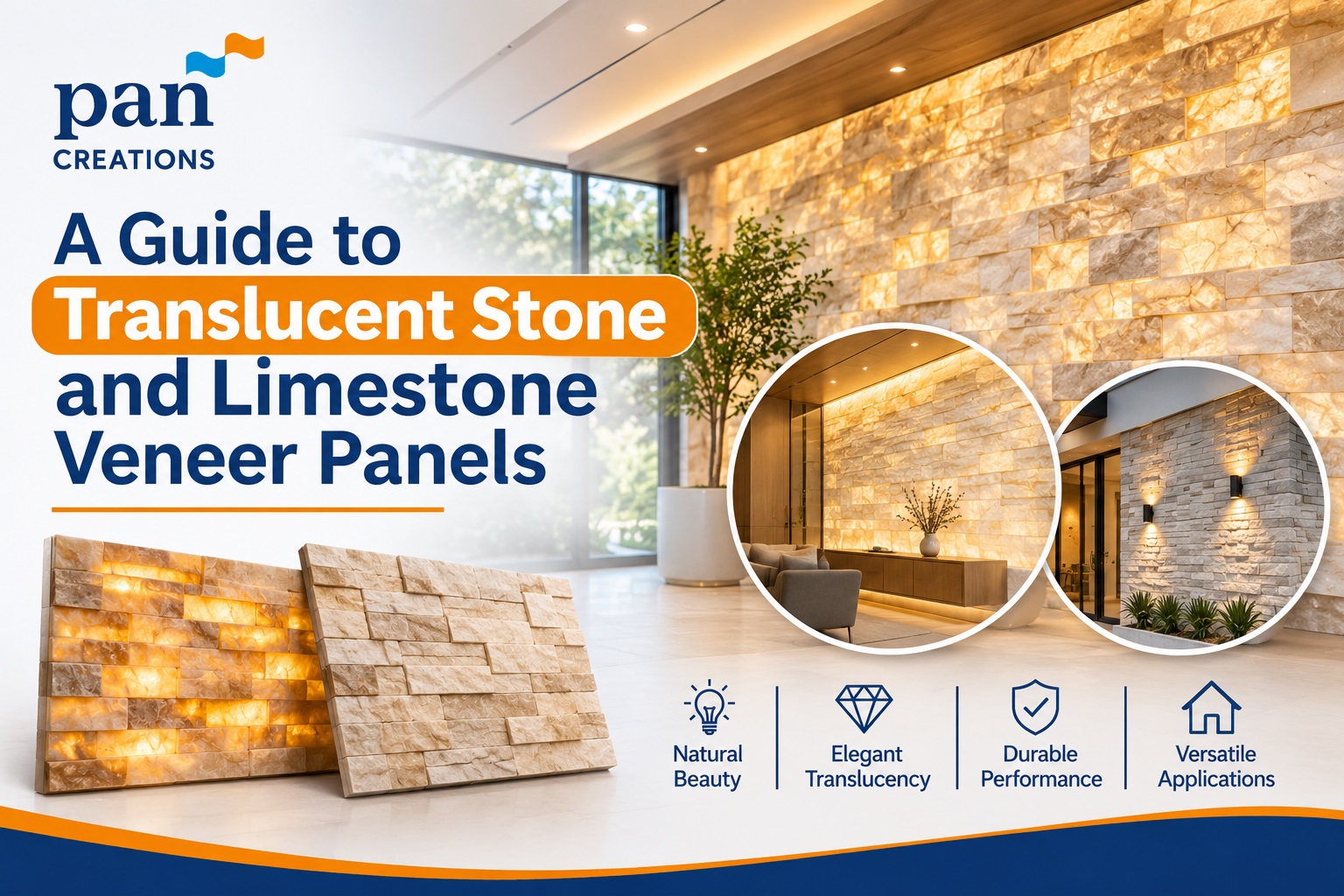
Architectural surfaces define how patrons perceive corporate headquarters, luxury hotels, and high-end retail venues. Sourcing materials that balance weight, durability, and visual impact is a priority for commercial builders. Today, specifiers routinely select translucent stone panels to introduce organic elegance into interior feature walls and hospitality reception counters without the massive structural load of conventional dimensional masonry.
Understanding how modern thin stone surfaces are manufactured and deployed enables developers to optimize project timelines, freight budgets, and labor costs. Both backlit stone sheets and textured limestone surfaces provide viable paths for contemporary building envelopes and interior fit-outs.
The Engineering Behind Thin Stone Veneer Production
Traditional stone extraction requires cutting massive slabs that measure twenty to thirty millimeters in thickness. These heavy slabs create major logistical challenges, requiring mechanical anchors, specialized structural framing, and crane equipment. Thin stone manufacturing solves these hurdles by splitting thin sheets directly from the host rock.
The process begins by stabilizing a quarry block of natural sedimentary or metamorphic rock. Technicians apply a liquid resin backing reinforced with fiberglass or fabric backing. This bonding method relies on specialized German technology to regulate curing temperatures, adhesive penetration, and mechanical strength.
Once the resin cures, the backing is carefully pulled away from the stone face. Natural cleavage planes in the stone allow a paper-thin mineral layer to release cleanly from the parent rock. The resulting panel retains the raw mineral texture and pattern of natural stone while remaining lightweight and pliable.
Understanding Backlit Stone Systems
Backlit stone brings light through genuine rock surfaces, revealing veining, mineral striations, and color gradients that remain hidden under standard front lighting.
Integrating translucent stone panels into commercial lobbies creates an immediate visual focal point. Because the mineral face is split to an ultra-thin profile, natural quartz, mica, and crystalline deposits permit ambient light transmission when mounted over high-output illumination sources.
Illumination and Substrate Selection
Standard fiberglass backings offer structural rigidity for flat opaque installations. However, illuminated assemblies require dedicated engineering to prevent shadowing, hotspots, or resin discoloration:
- In front of lighting or back light applications use UV translucent stone veneer. This specialized formulation incorporates transparent, UV-stable polymers that resist yellowing over extended operating cycles under artificial LED panels.
- Uniform light diffusion requires consistent sheet calibration. Using light-emitting diode matrices positioned at calculated offset distances avoids direct beam scalloping across the stone surface.
- Demountable frame assemblies allow service teams to access electrical drivers and LED strips for long-term commercial facility maintenance.
The Classic Appeal of Limestone Surfaces
While illuminated surfaces draw attention in dynamic entertainment zones, earthy sedimentary stone remains a premier choice for warm, understated architectural styling.
When natural earth tones and matte textures are required, limestone veneer panels provide a sophisticated, muted aesthetic. Limestone forms over millions of years through marine sedimentation, giving each sheet subtle fossilized details, soft beige and taupe color palettes, and a smooth tactile face.
Thin limestone sheets are prized in corporate boardrooms, executive lounges, and boutique residential entries where calm, grounding materials are preferred over high-contrast veining. Because the rock face is genuine limestone, it avoids the repetitive artificial patterns found in printed laminate or porcelain alternatives.
Mechanical Flexibility and Structural Substrates
Every project presents distinct structural demands, from standard flat partitions to complex geometry:
- For standard dry interiors, rigid fiberglass-backed sheets mount onto drywall, plywood, or cement board substrates using modified silane or polyurethane adhesives.
- When wrapping curved columns, circular reception islands, or tight radiuses, specify Fabric-backed Stone Veneer. This configuration replaces rigid fiberglass with a pliable fleece, providing maximum flexibility across complex concave and convex curves.
- Direct installation over existing tile or plastered surfaces eliminates demolition debris, reducing turnaround times during fast-track commercial renovations.
Specifying limestone veneer panels for high-traffic corridors delivers organic acoustic dampening alongside durable surface resistance against scuffs and daily wear.
Environmental Sealing and Protective Care
Natural limestone and split-face stone remain porous in their raw state. Protecting the rock against stains, grease, and moisture requires correct chemical sealing after mechanical fastening.
For shower applications, backslash, kitchen top, and wet vanity settings, treat the stone with an Impregnator sealer. A deep-penetrating Impregnator sealer coats internal pore structures without altering the natural matte appearance or creating an artificial plastic sheen. The barrier prevents water ingress, soap residue buildup, and oil absorption while allowing substrate moisture vapor to dissipate freely.
Contractors working with limestone veneer panels appreciate the substantial reduction in dead weight compared to traditional fifty-millimeter slabs, making upper-floor retrofits and elevator installations significantly easier.
For comprehensive technical instructions on adhesive spreaders, substrate preparation, and seam jointing techniques, consult our detailed guide on Natural Stone Veneer Installation Tips.
Sourcing Materials from Established Industry Manufacturers
The consistency of thin stone products depends directly on quarry selection, backing quality, and calibration accuracy. Pan Creations India (Contact No. +91 99298-28229, +91 94133-57766) is among the leading suppliers of this product, delivering high-performance stone panels to global commercial contractors, interior designers, and distributors.
Selecting an experienced manufacturing partner protects commercial developments from sheet delamination, dimensional variance, and color mismatching. With 23 years in veneer manufacturing & 33 years in stone manufacturing & exports, Pan Creations India combines traditional stone processing heritage with German technology manufacturing standards to ensure superior tensile adhesion across every batch.
The extensive industry expertise in stone veneer products at Pan Creations India allows architects to source custom dimensions, specialized fleece backings, and backlit assemblies tailored to specific project specifications.
Investing in translucent stone panels provides long-term value for commercial properties by combining authentic raw geology with fast jobsite installation and low maintenance requirements.
Project managers, general contractors, and business owners can contact Pan Creations India (Contact No. +91 99298-28229, +91 94133-57766) for installation information, technical specifications, and project quotations. Inquiries can be directed by email to sunil@pancreationsindia.com or by visiting waferthinstone.com.
Must Read: How Are Marble Veneer Sheets Made from Natural Stone?
Frequently Asked Questions
Q1. How do translucent stone sheets transmit artificial light?
Ans: Because the natural mineral layer is shaved down to less than two millimeters, light penetrates through quartz and crystalline fissures in the rock. When bonded to a clear polymer backing, backlighting illuminates the natural veins while casting a warm, ambient glow.
Q2. Can thin limestone veneer sheets be applied to wet areas?
Ans: Yes. You can install thin limestone sheets in wet areas like shower enclosures and backsplashes, provided you use a suitable waterproof substrate membrane, seal the seams, and treat the stone face with a penetrating impregnating sealer.
Q3. What cutting tools are required for sizing thin stone panels?
Ans: You can size thin stone sheets with standard woodworking equipment. Handheld circular saws equipped with continuous-rim diamond masonry blades make straight, chip-free cuts, while cutouts for electrical outlets can be finished with oscillating multi-tools or shears.
Q4. How does lightweight stone veneer affect structural building loads?
Ans: Weighing approximately 1.5 to 2.5 kilograms per square meter, thin stone sheets impose minimal dead weight on wall framing. This allows installations on lightweight drywall assemblies without structural reinforcement or metal anchors.
Q5. What routine cleaning protocol is recommended for thin stone surfaces?
Ans: Maintenance involves routine dusting and wiping with a soft microfiber cloth dampened with pH-neutral stone cleaner and warm water. Acidic compounds, abrasive powders, and bleach-based chemicals must never be used on natural stone installations.